
German
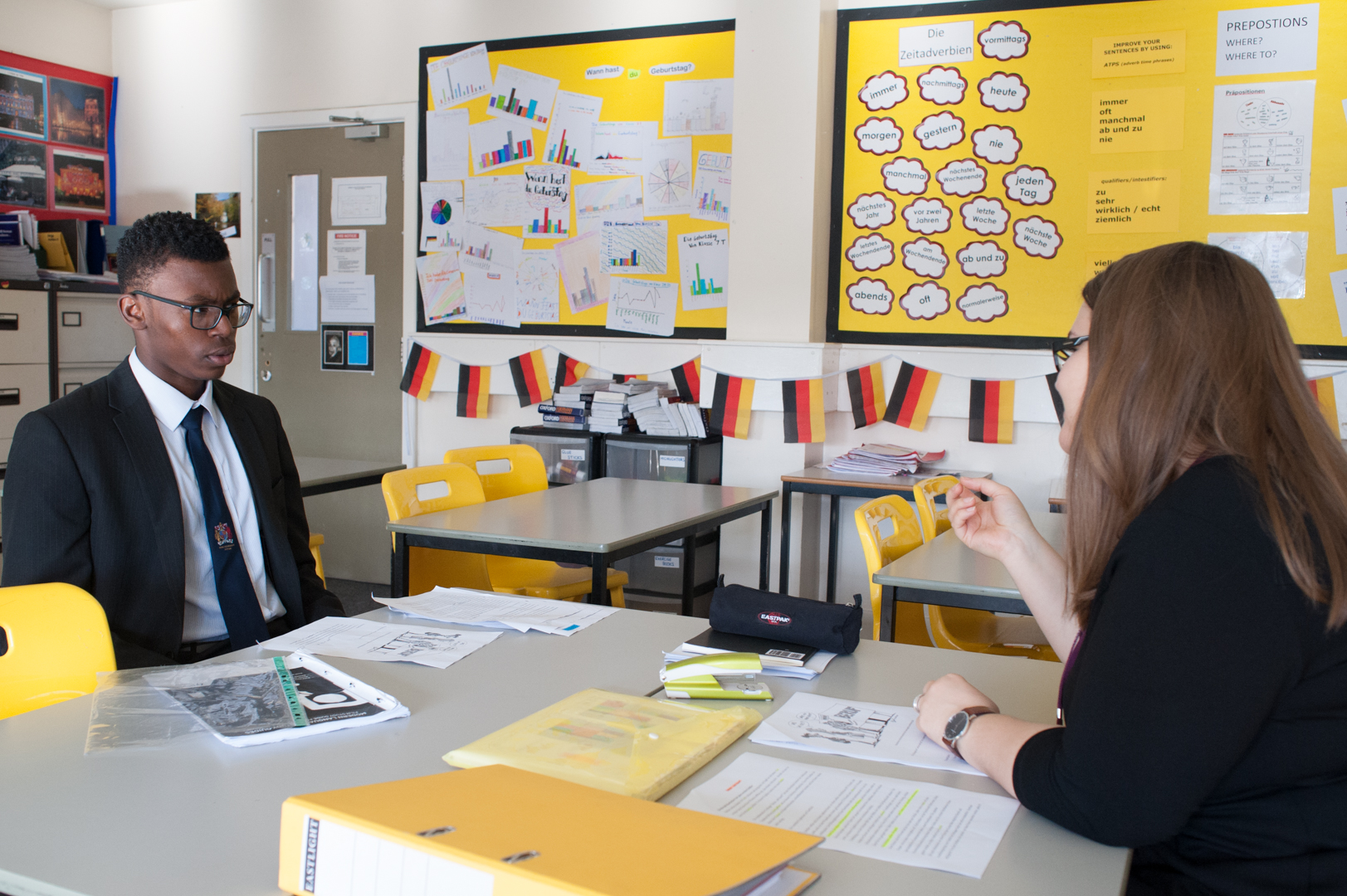
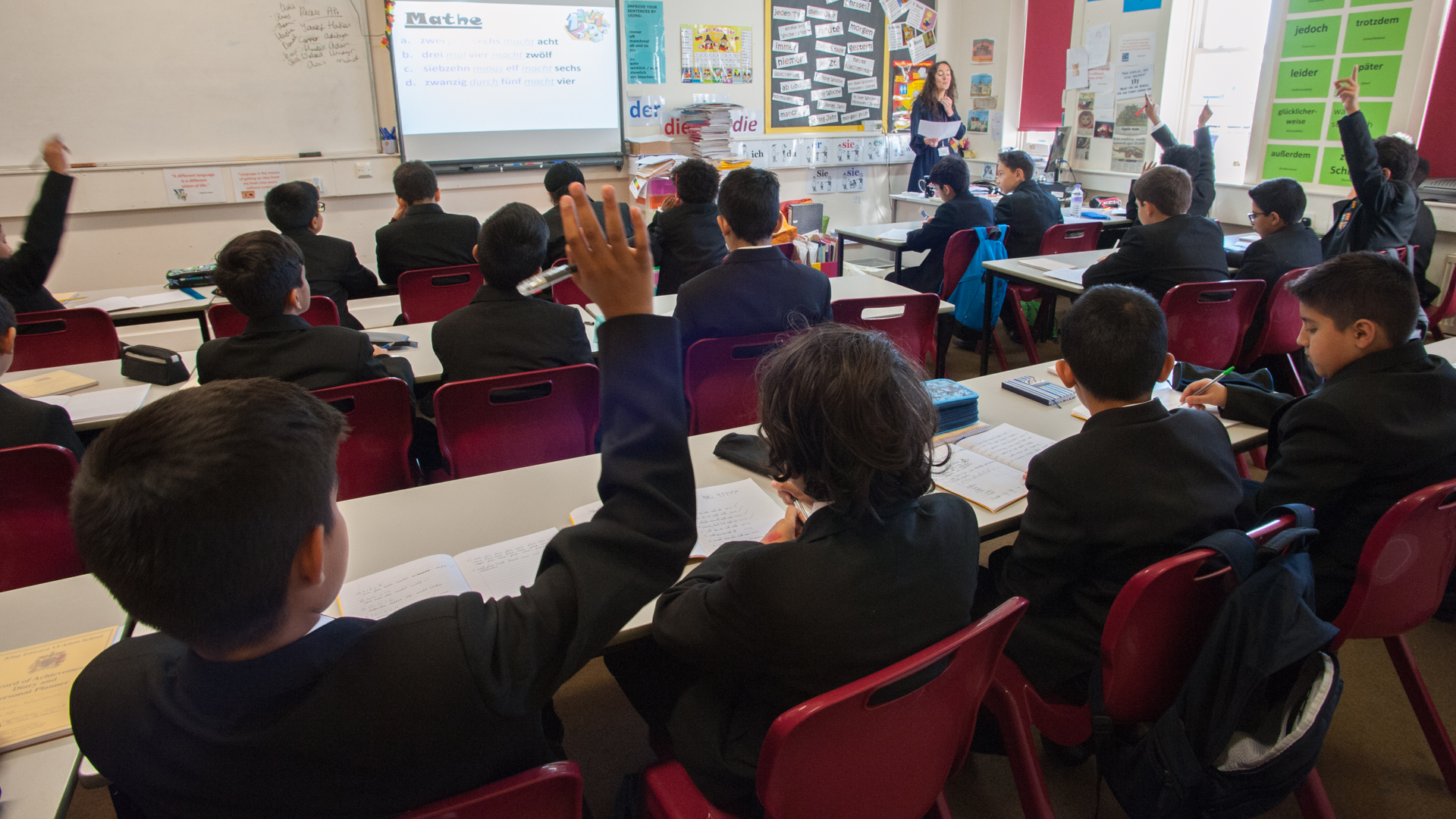
Modern foreign languages continue to play an important role in understanding our world. The skills required by students when learning a foreign language are highly valued by employers. We strive to ensure that our students understand this key concept and in understanding it, become conscious of the importance of working hard to achieve results.
We do not aim solely to equip our students with the skills they need to communicate in a foreign language, we aim also to help them to gain an understanding and appreciation of the cultural differences between our nations.
Teaching staff:
- Mrs N Wiessmann-Hubbard (Head of Languages)
- Mrs V Ologunde (Head of Year 8)
- Mrs K Miller
- Mr M Brady (Headteacher)
Trips and Visits:
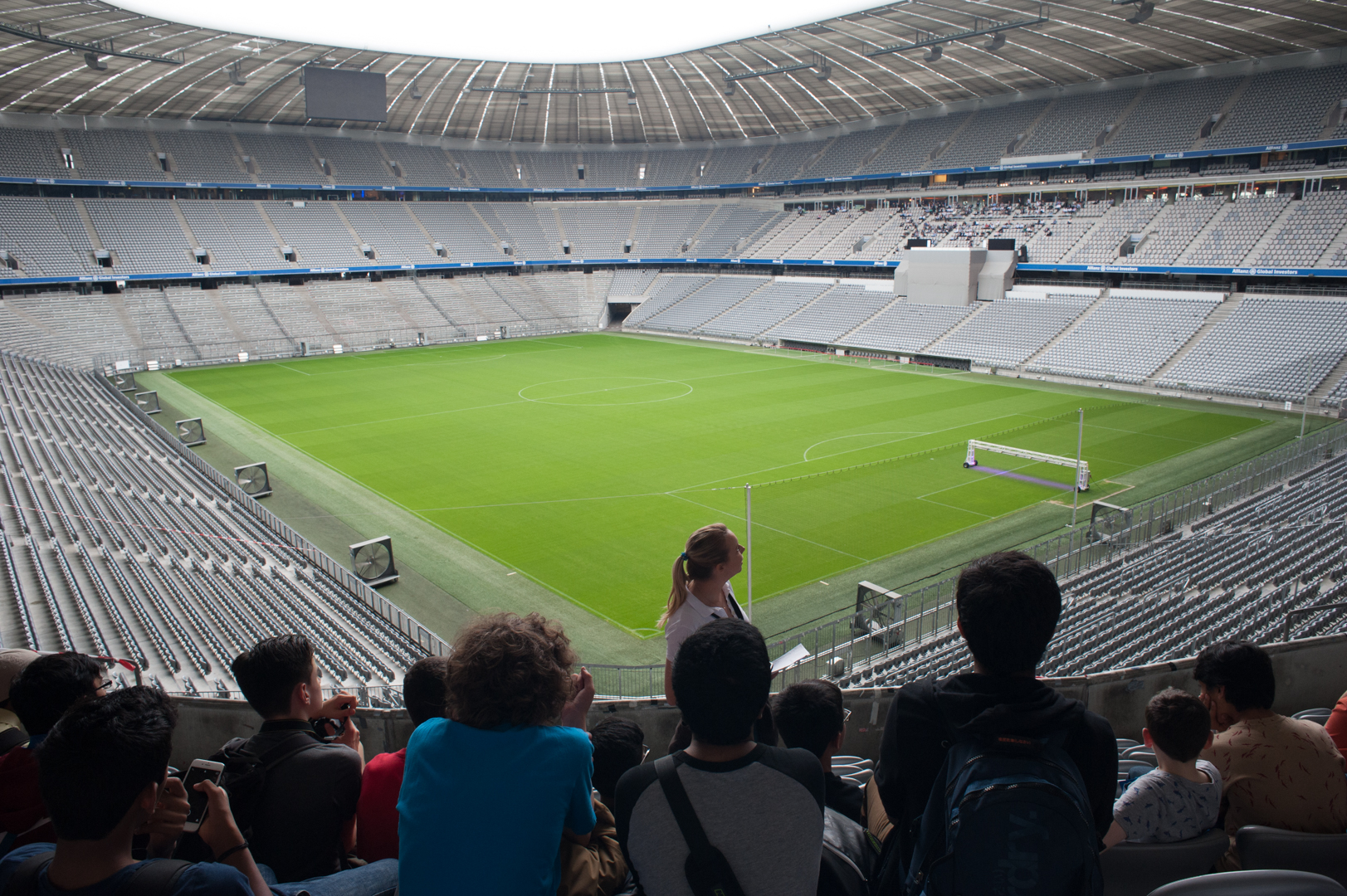
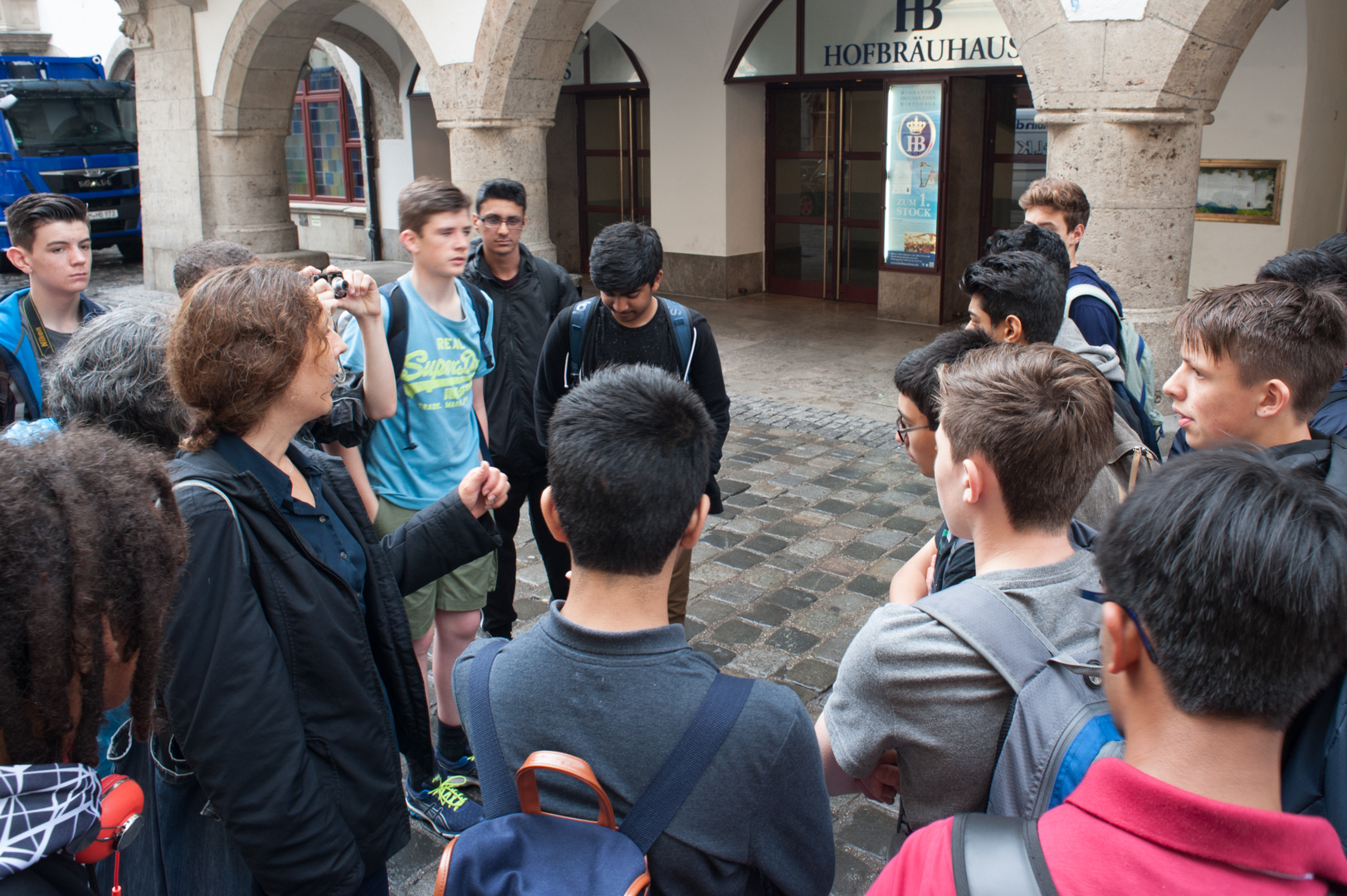
- German careers visit to Keele University
Year 7
| Summary of curriculum: | We follow The Language Gym Absolut Beginners, Beginners to Intermediate and Trilogy course in year 7. Students are provided with one work booklet per unit of work, which has a sentence builder page. The sentence builder doubles up as a vocabulary booklet and sentence structure support. |
|---|---|
| Main topics: |
|
| How parents can support their son’s learning: |
https://uk.language-gym.com https://quizlet.com
|
| Useful websites: |
Year 8
| Summary of curriculum: | We continue to follow The Language Gym Trilogy course in year 8. Students are provided with one work booklet per unit of work, which has a sentence builder page. The sentence builder doubles up as a vocabulary booklet and sentence structure support. |
|---|---|
| Main topics: |
|
| How parents can support their son’s learning: |
· a German learner’s dictionary with a grammar section · allow regular access to the following websites https://uk.language-gym.com https://quizlet.com · actively ensuring space every day to learn vocab for 10 minutes a day and not only before a vocabulary test as learning vocabulary is more difficult than it sounds! We advise using the LOOK-COVER-WRITE-CHECK method · testing vocabulary before a test e.g. using the sentence builder page, ask your child an English word and they must write the German word for it |
| Useful websites: |
Year 9
| Summary of curriculum: | In Year 9, students build on the strong linguistic foundations developed in Year 7 and 8, preparing them for the transition to GCSE study. The curriculum is designed to deepen language skills, increase independence in communication, and foster cultural awareness by revisiting and extending key grammatical structures while introducing more complex and a wider range of language. Resources used are The Language Gym Trilogy course for yr 9 at the beginning of the course and PowerPoints from various sources in the second part of the year. Students are provided with a work booklet, vocabulary booklet and sentence builder booklet. |
|---|---|
| Main topics: |
School
Free time
Grammar topics: expressing opinions, justifying ideas, using a variety of tenses |
| How parents can support their son’s learning: |
· Allow regular access to the following online resources https://uk.language-gym.com https://quizlet.com https://activehub.pearson.com · encourage homework to be completed on time and to a good standard · actively ensuring space and time every day to learn vocab for 15 minutes a day and not only before a vocabulary test as learning vocabulary is more difficult than it sounds! We advise using the LOOK-COVER-WRITE-CHECK method · testing vocabulary before a test e.g. using the sentence builder page, ask your child an English word and they must write the German word for it |
| Useful websites: |
Year 10
| Summary of curriculum: |
In Year 10, students begin the Edexcel GCSE German course, building on the strong linguistic foundations developed in Years 7, 8 and 9. Students revisit and extend key grammatical structures while being introduced to a wider range of GCSE themes, and begin to develop the skills needed for success in the final examinations. The primary resource used is the Pearson Edexcel GCSE German textbook, which provides a clear and structured pathway through the course content. This is supported by PowerPoint resources from a variety of sources. Students are provided with a work booklet, vocabulary booklet, and sentence builder booklet to support both classroom learning and independent study. |
|---|---|
| Main topics: |
Thematic context: Studying and my future Thematic context: my personal world; media and technology Thematic context: lifestyle and wellbeing |
| How parents can support their son’s learning: |
· allow regular access to the following online resources https://quizlet.com https://activehub.pearson.com · encourage homework to be completed on time and to a good standard · actively ensuring space and time every day to learn vocab for 20 minutes a day and not only before a vocabulary test as learning vocabulary is more difficult than it sounds! We advise using the LOOK-COVER-WRITE-CHECK method · testing vocabulary before a test e.g. using the vocabulary booklet, ask your child an English word and they must write the German word for it |
| Useful websites: |
Year 11
| Summary of curriculum: | In Year 11, students complete the Edexcel GCSE German course. They continue to use the Pearson Edexcel GCSE German textbook and are provided with a work booklet, vocabulary booklet, and sentence builder booklet per chapter to support both classroom learning and independent study. |
|---|---|
| Main topics: |
Thematic context: my neighbourhood Thematic context: travel and tourism Thematic context: studying and my future Revisiting thematic context: my personal world |
| How parents can support their son’s learning: |
· allow and actively encourage regular access to the following online resources https://quizlet.com https://activehub.pearson.com · encourage homework to be completed on time and to a good standard · actively ensuring space and time every day to learn vocab for 20 minutes a day and not only before a vocabulary test as learning vocabulary is more difficult than it sounds! We advise using the LOOK-COVER-WRITE-CHECK method · testing vocabulary before a test e.g. using the vocabulary booklet, ask your child an English word and they must write the German word for it |
| Useful websites: |