History
Ensuring all students become well-informed, balanced and engaged Historians and citizens
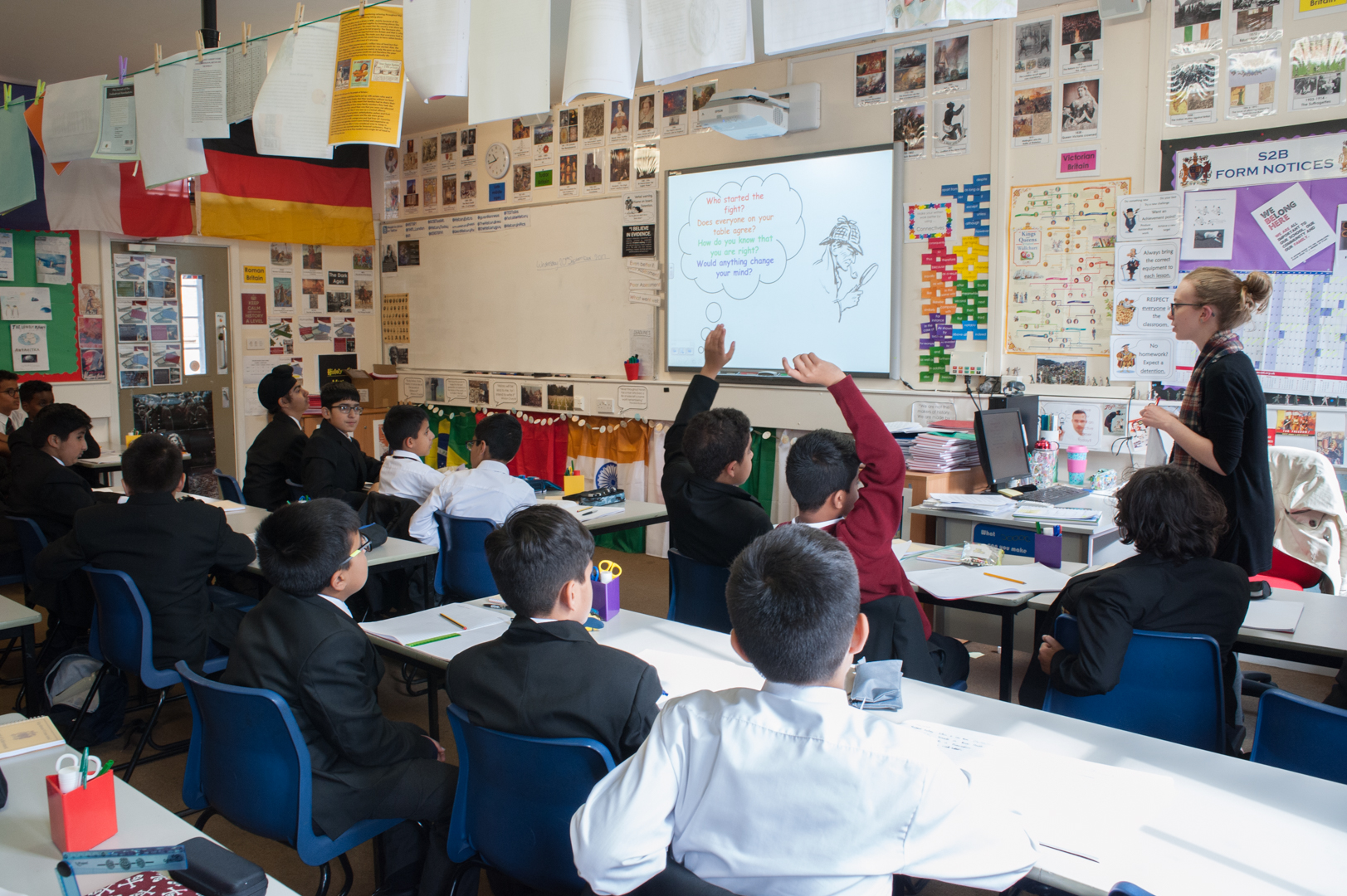
The study of History is not simply the study of the past; it is in fact the construct of the past in the present. With an equal, interdependent focus on both substantive and disciplinary knowledge, History is in a unique position in the school curriculum to allow pupils to construct arguments and support them to become analytical citizens who can question past and present human motivation and society with skill and confidence. Our curriculum aims to give our students an understanding of their own historical context, ensuring all students become well-informed, balanced and engaged Historians and citizens.
We are passionate about instilling a love of the subject into our students. We want them to love the study of History as much as we do, to dive into its never-ending depths, to embrace its complexities and contradictions and to emerge with a fervent appreciation of the world around them.
Teaching staff:
-
Mrs C Cresswell (Subject Leader)
-
Mr T Amann
-
Mrs N Laverty
Educational visits:
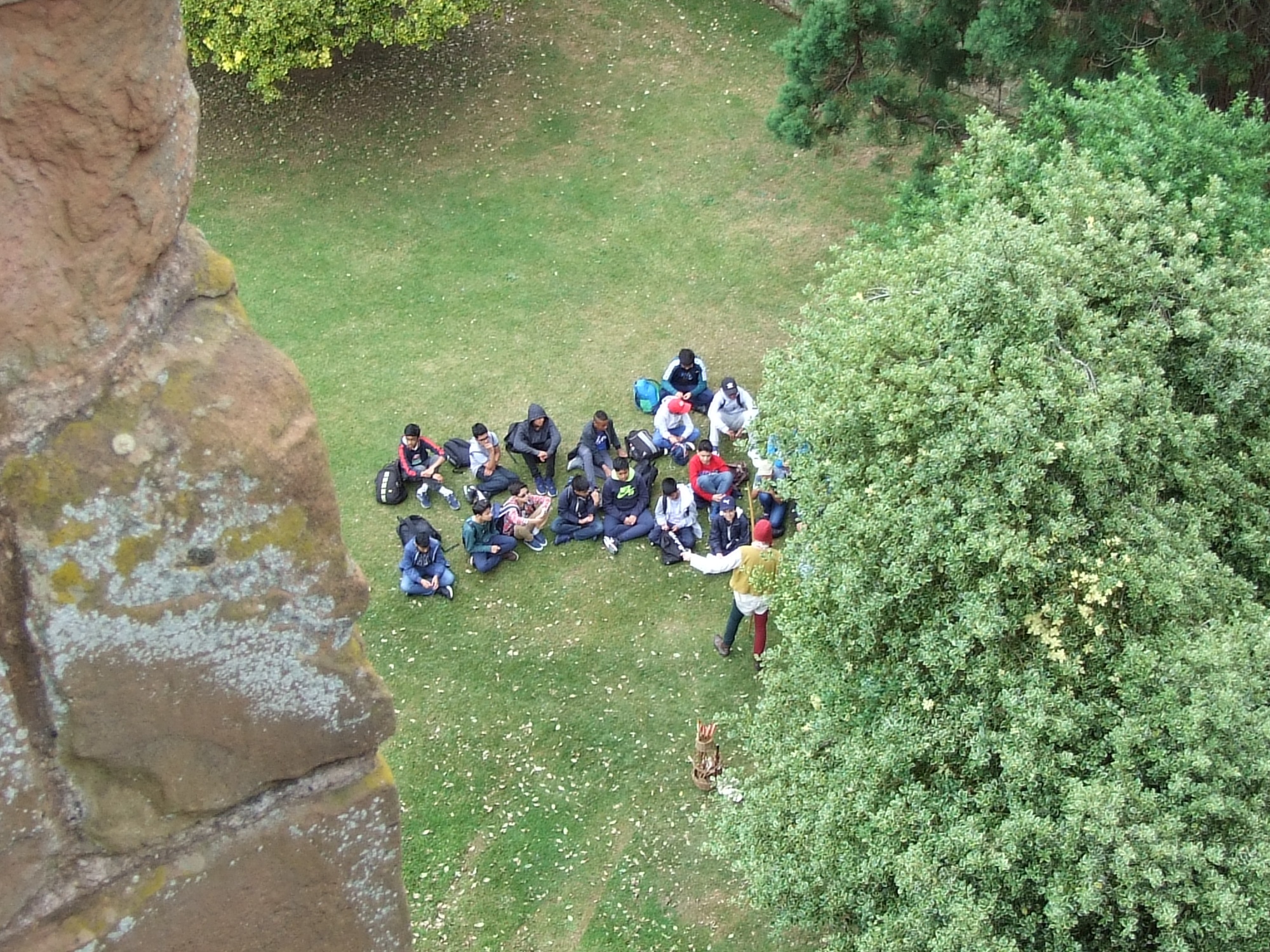
Aston's History Department offers students many varied opportunities to enrich their learning both in and out of school.
In Key Stage 3, students take part in active, hands-on experience days, during which they learn in depth about aspects of history which directly complement their studies in lessons; this includes a visit to the Black Country Living Museum in Year 7 and a visit to the Bosworth Battlefield in Year 9.
For GCSE and A Level students, the History Department is continually looking for additional visits and speakers that effectively support them in their preparation for their examinations. Recently, students have attended lecture days and active study days, which are specially designed to support their revision and deepen their understanding of their history studies.
Year 7 - People and Society
| Summary of curriculum: |
Key Question: How and why has the experience of ordinary people in Britain and the World changed over time? Through the study of key periods and events, pupils investigate how different people lived, worked, and interacted with society from the medieval era to the modern age. They examine the impact of factors such as power, technology, migration, religion, conflict, and social change on everyday life. By analysing historical evidence and considering different perspectives, students develop their understanding of continuity and change, helping them to make connections between the past and the world they live in today. |
|---|---|
| Main topics: |
To what extent did ordinary life change between 1000 and 1500?
To what extent was there a Renaissance?
To what extent did ordinary life change between 1500 and 1900?
To what extent has ordinary life changed in the 20th and 21st centuries?
|
| How parents can support their son’s learning: |
To support your son, please encourage him to explore the topics he will be studying in History in Year 7. There are a huge number of podcasts and TV programmes that he can listen to or watch to develop his historical knowledge, such as:
|
| Useful websites: |
Year 8 - People and Power
| Summary of curriculum: |
Key Question: How has the relationship between the rulers of the World and the ruled changed over time? Through the study of empires, revolutions, political movements, and struggles for rights and representation, pupils explore how power has been gained, exercised, challenged, and transformed across different societies and periods. They examine the experiences of both leaders and ordinary people, considering how individuals and groups have responded to authority and campaigned for change. By analysing historical evidence and evaluating different perspectives, students develop a deeper understanding of power, governance, and the ongoing relationship between those who rule and those who are governed. |
|---|---|
|
Main topics: |
To what extent did Medieval Kings establish their control over Britain?
Why was Royal Authority challenged in Early Modern Europe?
Did the British Empire collapse or was it dismantled?
How did Black Americans fight for their civil rights?
To what extent is there equality in the modern-day world?
|
| How parents can support their son’s learning: |
To support your son, please encourage him to explore the topics he will be studying in History in Year 8. There are a huge number of podcasts and TV programmes that he can listen to or watch to develop his historical knowledge, such as:
|
| Useful websites: |
Year 9 - People and Conflict
| Summary of curriculum: |
Key Question: Why has conflict occurred over time and how has this impacted Britain and the World? Through the study of major conflicts, their causes, and their consequences, pupils investigate how political, economic, religious, and ideological tensions have shaped societies across different periods. They examine the experiences of those involved in conflict, both on the front line and on the home front, and consider how war and conflict have influenced governments, communities, technology, and international relations. By analysing historical evidence and evaluating a range of perspectives, students develop a deeper understanding of the causes of conflict and its lasting impact on Britain and the world today. |
|---|---|
| Main topics: |
How did warfare change from c1066 to 1700?
How did conflict contribute to Britain’s imperial power between 1700 and 1900?
How should we remember WW1?
How did the Second World War affect Birmingham?
To what extent has warfare changed after 1945?
|
| How parents can support their son’s learning: |
To support your son, please encourage him to explore the topics he will be studying in History in Year 9. There are a huge number of podcasts and TV programmes that he can listen to or watch to develop his historical knowledge, such as:
|
| Useful websites: |
Year 10
| Summary of curriculum: |
GCSE History students at Aston follow the new AQA GCSE course. This qualification is linear, which means that students will sit all their exams at the end of the course. GCSE History students must take assessments in both of the following papers in the same series:
Paper 1: Understanding the modern world Germany, 1890–1945: Democracy and dictatorship
All students will also complete the wider world study of conflict and tension, during 1918 – 1939. This depth study enables students to understand the complex and diverse interests of different individuals and states including the great powers. It looks at concepts such as national self-determination, ideas of internationalism and the challenges of revising the peace settlement. It focuses on the causes of the Second World War and seeks to show how and why conflict occurred and why it proved difficult to resolve the issues which caused it. This study also considers the role of key individuals and groups in shaping change, as well as how they were affected by and influenced international relations. |
|---|---|
| Main topics: |
|
| How parents can support their son’s learning: |
To support your son, please encourage him to engage in wider reading around the topics listed above. He will also benefit from reading the specification on the AQA website and becoming familiar with the mark schemes for each section of his history GCSE. As he progresses through the course, he will greatly benefit from applying his knowledge to past examination questions, all of which can be found on the AQA History website and from your son’s class teacher. |
| Useful websites: |
Year 11
| Summary of curriculum: |
Paper 2: Shaping the Nation Thematic study of Britain: Health and the people, c1000 to the present day. This thematic study will enable students to gain an understanding of how medicine and public health developed in Britain over a long period of time. It considers the causes, scale, nature and consequences of short and long term developments, their impact on British society and how they were related to the key features and characteristics of the periods during which they took place. Although the focus of this study is the development of medicine and public health in Britain, it will draw on wider world developments that impacted on the core themes. Students will have the opportunity to see how some ideas and events in the wider world affected Britain and will promote the idea that key themes did not develop in isolation, but these ideas and events should be referenced in terms of their effects on the core theme for Britain and the British people. Students will study the importance of the following factors:
Students will show an understanding of how factors worked together to bring about particular developments at a particular time, how they were related and their impact upon society. Students will develop an understanding of the varying rate of change, why change happened when it did, whether change brought progress, and the significance of the change(s). They should also be able to distinguish between different types of causes and consequences, such as short/long-term causes, intended/unintended consequences. This option focuses on the following questions:
British depth study: Norman England, 1066 to c1100 This option allows students to study in depth the arrival of the Normans and the establishment of their rule. The depth study will focus on major aspects of Norman rule, considered from economic, religious, political, social and cultural standpoints of this period and arising contemporary and historical controversies. As part of this study, students also complete a study of the historic environment related to their British depth study. Students will be examined on a specific site in depth. This site will be as specified and will be changed annually. It is intended that study of different historic environments will enrich students’ understanding of Norman England. The study of the historic environment will focus on a particular site in its historical context and should examine the relationship between a specific place and associated historical events and developments. Students will be expected to answer a question that draws on second order concepts of change, continuity, causation and/or consequence, and to explore them in the context of the specified site and wider events and developments of the period studied. Students should be able to identify key features of the specified site and understand their connection to the wider historical context of the specific historical period. Sites will also illuminate how people lived at that time, how they were governed and their beliefs and values. The following aspects of the site should be considered:
Students will be expected to understand the ways in which key features and other aspects of the site are representative of the period studied. In order to do this, students will also need to be aware of how the key features and other aspects of the site have changed from earlier periods. Students will also be expected to understand how key features and other aspects may have changed or stayed the same during the period. |
|---|---|
| Main topics: |
|
| How parents can support their son’s learning: |
To support your son, please encourage him to engage in wider reading around the topics listed above. He will also benefit from reading the specification on the AQA website and becoming familiar with the mark schemes for each section of his history GCSE. As he progresses through the course, he will greatly benefit from applying his knowledge to past examination questions, all of which can be found on the AQA History website and from your son’s class teacher. |
| Useful websites: |
Year 12
| Summary of curriculum: |
A Level students at Aston follow the AQA A Level course. Students will study three separate units, each designed to stretch their historical understanding in different ways. |
|---|---|
| Main topics: |
Unit 1: The British Empire, c1857 – 1967 (breadth study) Students will study in breadth issues of change, continuity, cause and consequence in this period through the following key questions:
Unit 3 : The Development of Civil Rights in the USA (Coursework) The purpose of the historical investigation is to enable students to develop the skills, knowledge and historical understanding acquired through the study of the examined components of the specification. Through undertaking the historical investigation students will develop an enhanced understanding of the nature and purpose of history as a discipline and how historians work, which will be fantastic preparation for future university study. Students will study the main individuals and changes that impacted upon the development of civil rights in the USA at the end of year 12, and will then be asked to choose a topic and question for their coursework. They will then complete their research over the summer holidays before writing it up and submitting their work by the February half-term in year 13. |
| How parents can support their son’s learning: |
To support your son, please encourage him to engage in wider reading around the topics listed above. Aside from the core texts they have been given for each unit there are a large number of texts available in the school library and the history department. For the coursework unit it is imperative that the students read widely around the subject and are asked to begin reading for the unit at the end of year 12. Your son should also read the specification on the AQA website (follow link below) and become familiar with the mark schemes for each section of his History A Level. As he progresses through the course, he will greatly benefit from applying his knowledge to past examination questions, all of which can be found on the AQA website and from your son's class teachers. Your son may also benefit from reading other texts such as newspaper articles to gain an appreciation of how to construct a written argument. |
| Useful websites: | http://www.aqa.org.uk/subjects/history/as-and-a-level/history-7041-7042 |
Year 13
| Summary of curriculum: |
Aston's A Level history students follow the AQA A level course. Students will study three separate units, each designed to stretch their historical understanding in different ways. |
|---|---|
| Main topics: |
Unit 2: The Birth of the USA, 1760-1801 (Depth Study) Students will study in depth the years in which thirteen American colonies chose to sever their links with Great Britain and thus found the USA. This study explores the concepts of imperialism, mercantilism and legitimate government and encourages students to reflect upon the interplay of forces from below and above, the importance of ideology and the economy in political development and the issues facing those who attempt to challenge an established authority. Unit 3: The Development of Civil Rights in the USA (Coursework) The purpose of the historical investigation is to enable students to develop the skills, knowledge and historical understanding acquired through the study of the examined components of the specification. Through undertaking the historical investigation students will develop an enhanced understanding of the nature and purpose of history as a discipline and how historians work, which will be fantastic preparation for future university study. Students will study the main individuals and changes that impacted upon the development of civil rights in the USA at the end of year 12, and will then be asked to choose a topic and question for their coursework. They will then complete their research over the summer holidays before writing it up and submitting their work by February half term in year 13. |
| How parents can support their son’s learning: |
To support your son, please encourage him to engage in wider reading around the topics listed above. Aside from the core texts they have been given for each unit there are a large number of texts available in the school library and the history department. Your son should also read the specification on the AQA website (follow link below) and become familiar with the mark schemes for each section of his history A Level. As he progresses through the course, he will greatly benefit from applying his knowledge to past examination questions, all of which can be found on the AQA website and from your son's class teachers. Your son may also benefit from reading other texts such as newspaper articles to gain an appreciation of how to construct a written argument. |
| Useful websites: | http://www.aqa.org.uk/subjects/history/as-and-a-level/history-7041-7042 |