
Religious Studies and Philosophy
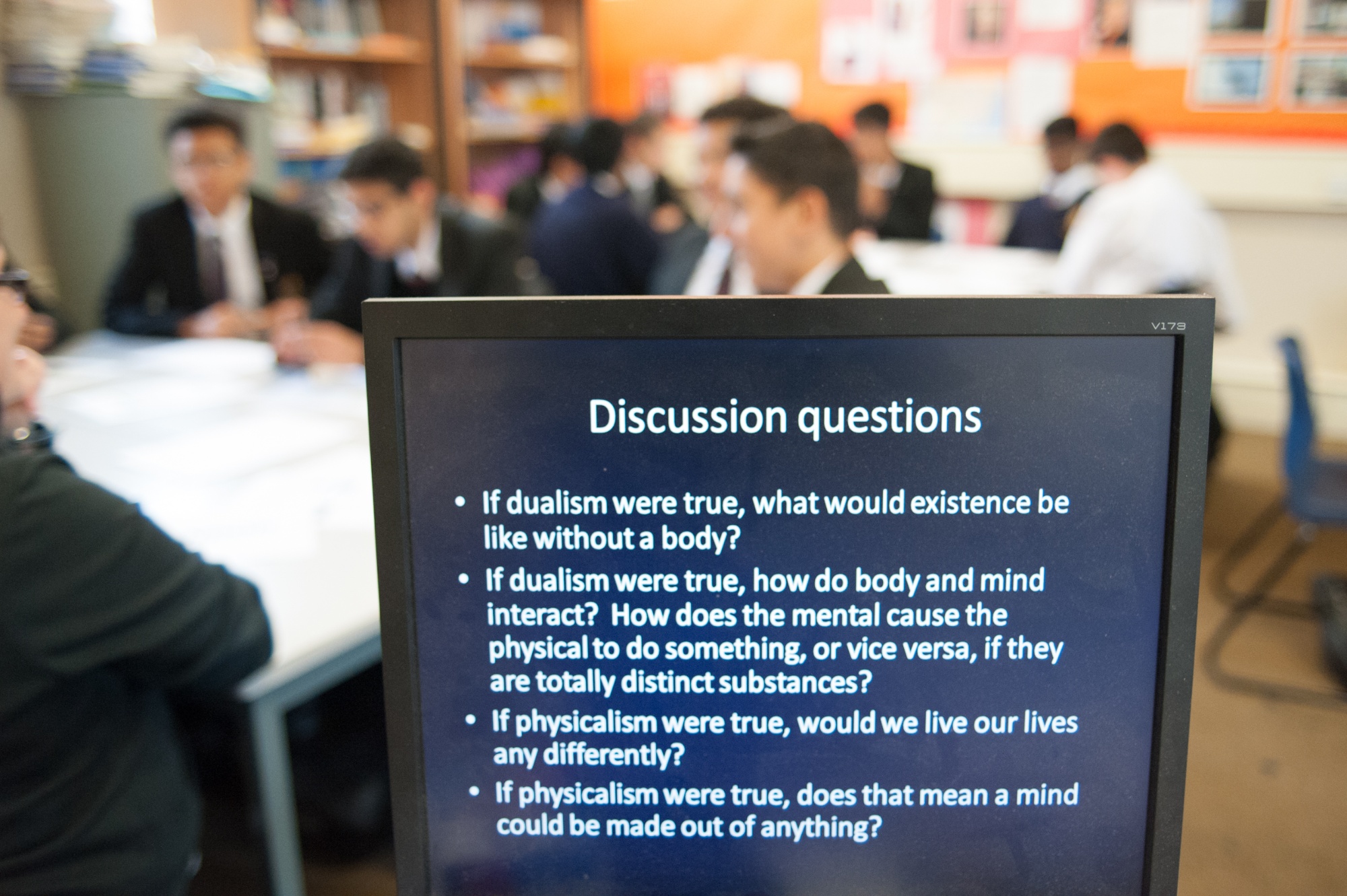
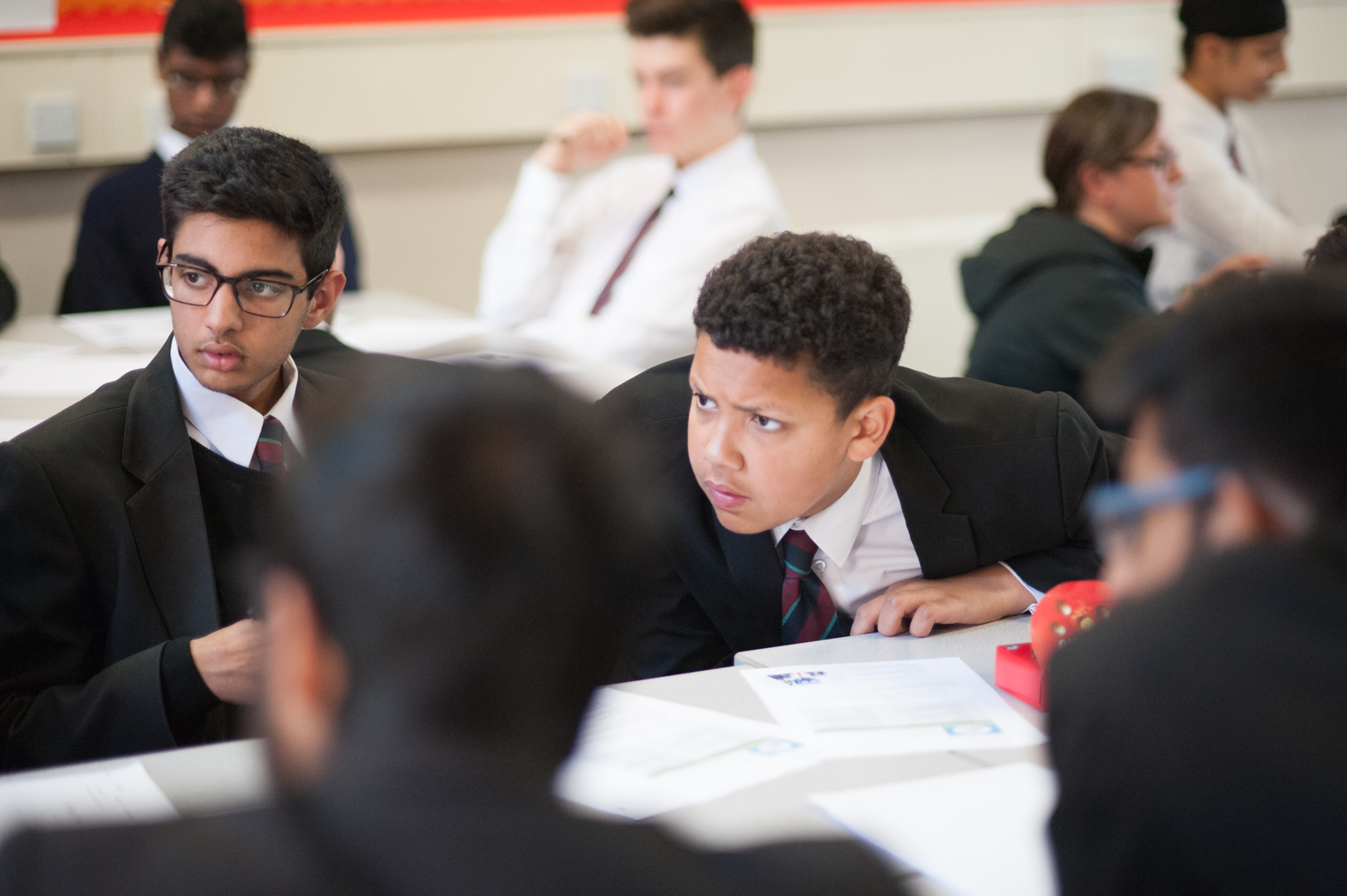
On leaving the school we expect all students who have studied RS/Philosophy to be capable of continuing critical reflection about their own beliefs, and the beliefs of others, drawing from a broad body of relevant knowledge. Using the knowledge and skills gained, our students should be able to evaluate the justifications for different positions, including their own, and identify fallacies, logical reasoning, and competing interpretations, in order to engage constructively as citizens of the world.
Please note, parents/carers have the right to withdraw their child from all or parts of the Religious Studies curriculum.
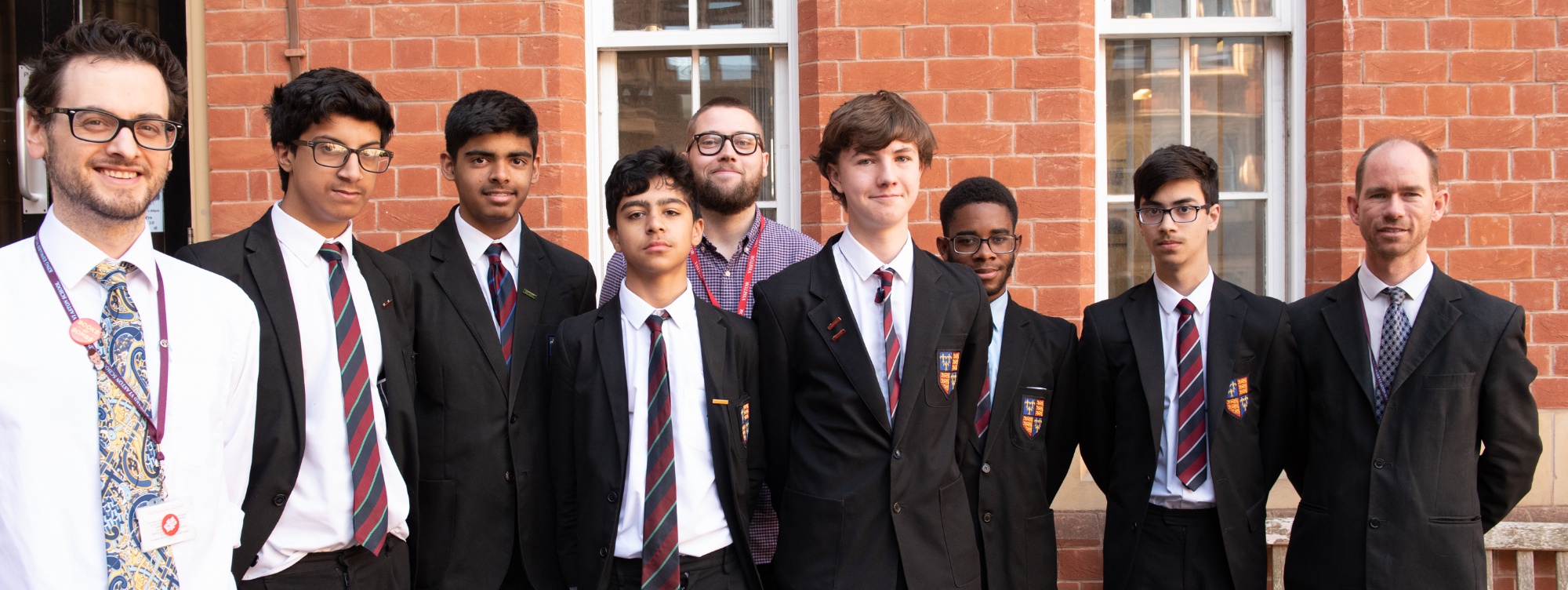
Teaching staff:
- Mr M Wilcock (Subject leader)
- Ms K Whyte
Educational visits:
- Participation in A Level philosophy conferences: recent conferences have taken place at Oxford, Cardiff University, the University of Birmingham, and through Peter Vardy’s Candle Conferences.
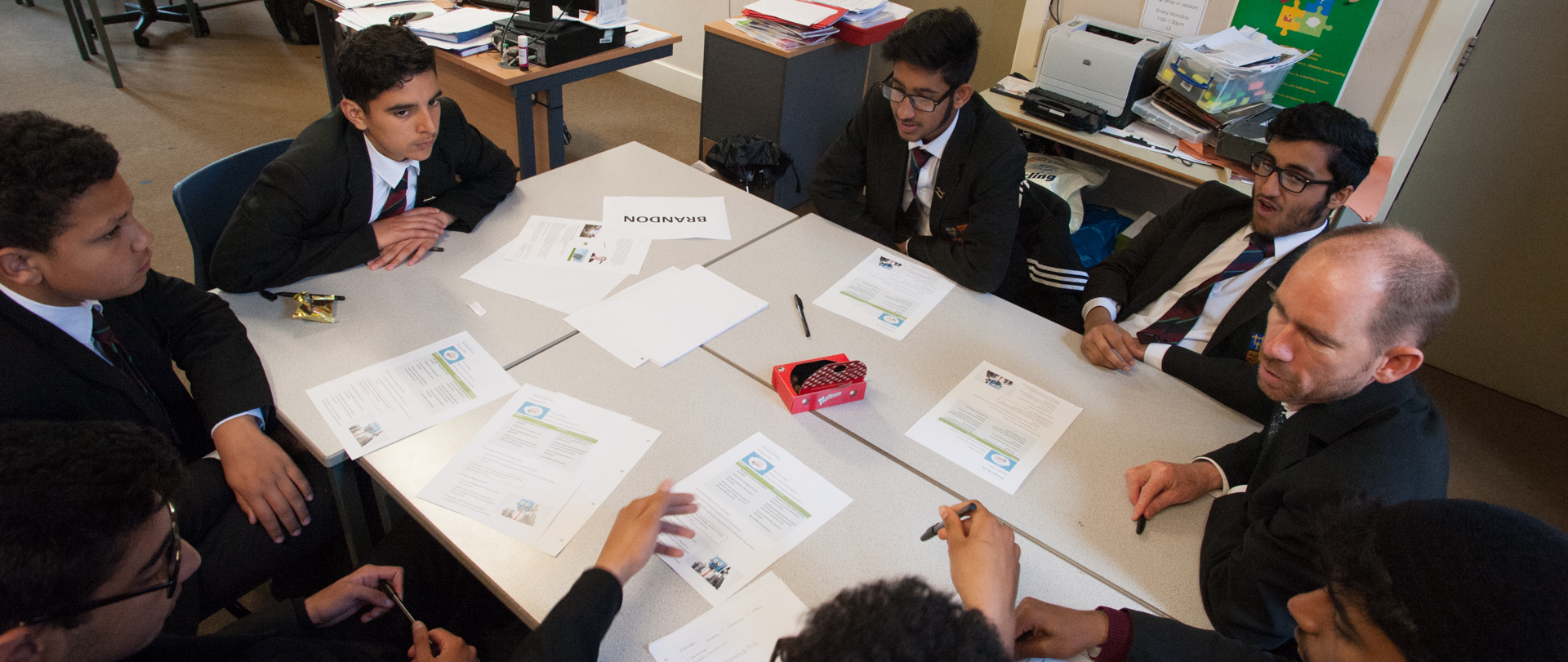
- Year 10 philosophy morning and House Philosophy Competition, in conjunction with local universities or philosophers – past guests have included scholars from Warwick University, York University, and Panpsycast's host, Jack Symes).
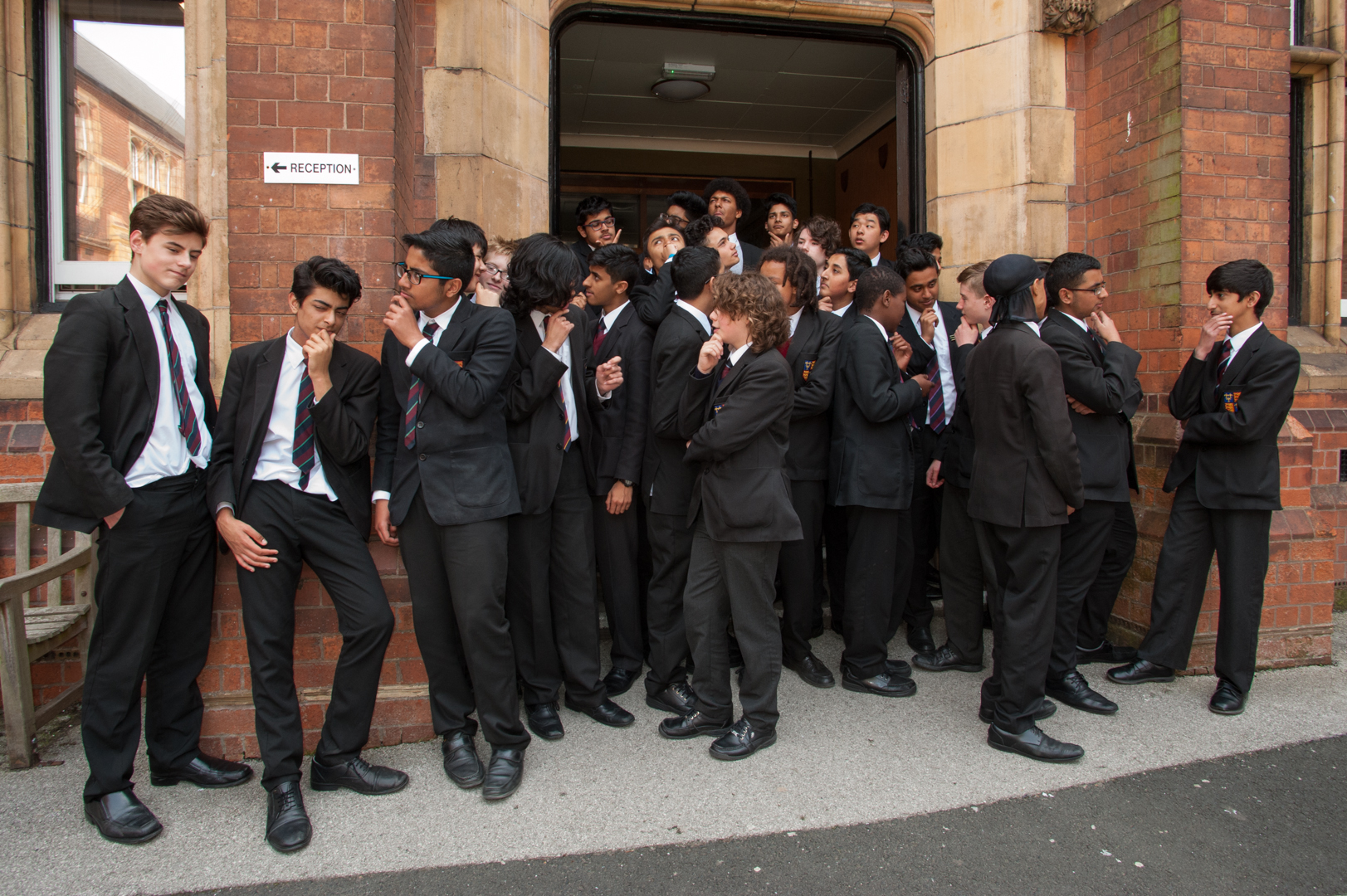
- Year 11 'Philosopher’s Stone' inter-school Competition between KE Aston, KE Handsworth Girls, KE Handsworth Boys and KE Handsworth Wood Girls.
Year 7
| Summary of curriculum: |
In year 7 we look at three major world religions through the lens of a different philosophical or ethical question. |
|---|---|
| Main topics: |
Autumn 1: Judaism: beliefs, foundations and worship
Autumn 2 Judaism: How can an all-loving God allow evil?
Spring 1: Christianity: Beliefs, Foundations and Worship
Spring 2: Christianity: Did the resurrection really happen?
Summer 1: Islam: beliefs, foundations and worship
Summer 2: Islam: How do we combat Islamophobia and religious prejudice?
|
| How parents can support their son’s learning: |
As well as a complete reading list found in your son’s study pack for each topic and key resources and lesson materials being available each week via OneNote, the following textbooks may offer useful support materials:
|
Year 8
| Summary of curriculum: |
In year 8 we look at three more major world religions through the lens of a different philosophical or ethical question. |
|---|---|
| Main topics: |
Autumn 1: Hinduism: beliefs, foundations and worship
Autumn 2: Hinduism: How do I know right and wrong?
Spring 1: Buddhism: beliefs, foundations and worship
Spring 2: Buddhism: What happens when we die?
Summer 1: Sikhism: beliefs, foundations and worship
Summer 2: Sikhism: How should we treat each other?
|
| How parents can support their son’s learning: |
As well as a complete reading list found in your son’s study pack for each topic and key resources and lesson materials being available each week via OneNote, the school VLE, the following textbooks may offer useful support materials:
|
Year 9
| Summary of curriculum: |
In year 9 we begin an introduction to Philosophy, Ethics and Religious Philosophy, in preparation for their GCSE which we start in the final weeks of year 9. |
|---|---|
| Main topics: |
Autumn term : Introduction to Philosophy
Spring term: Introduction to Ethics
Summer term: Introduction to Theology and Starting GCSE Religious Studies
|
| How parents can support their son’s learning: |
As well as a complete reading list found in your son’s study pack for each topic and key resources and lesson materials being available each week via OneNote, the school VLE, the following textbooks may offer useful support materials:
Also use all the resources mentioned on the YEAR 10/11 page |
Year 10
| Summary of curriculum: |
In years 10 and 11 all students will undertake a GCSE in Religious Studies. This is the AQA Religious Studies A course (8062) for teaching from September 2016. The GCSE covers two major world religions, Christianity and Islam, as well as exploring four different philosophical and ethical themes. |
|---|---|
| Main topics: |
|
| How parents can support their son’s learning: |
Ensure your son completes and keeps safe his study for each unit. Study Packs will contain the bulk of your son’s work for each unit, alongside a wealth of useful printed notes for revision and further reading. It is vital that he retains his year 10 study packs for revision in year 11. As well as these study packs, and key resources and lesson materials being available each week via OneNote, the school VLE, the following textbooks may offer useful support materials:
You can also encourage your son to read around the subject, either using the school VLE for useful links to RS websites, or encouraging him to read a newspaper if there are matters of religious, philosophical and ethical interest being covered. Ask him what topics he is covering and ask him questions about them. Challenge his answers. Encourage him to give good reasons to back up the answers he gives, including specific religious teachings to support religious arguments and ideas. |
Year 11
| Summary of curriculum: |
In Years 10 and 11 all students will undertake a GCSE in Religious Studies. This is the AQA Religious Studies A course (8062) taught from September 2016. The GCSE covers two major world religions, Christianity and Islam, as well as exploring four different philosophical and ethical themes. |
|---|---|
| Main topics: |
|
| How parents can support their son’s learning: |
Ensure your son completes and keeps safe his study for each unit. Study Packs will contain the bulk of your son’s work for each unit, alongside a wealth of useful printed notes for revision and further reading. It is vital that he retains his year 10 study packs for revision in year 11. As well as these study packs, and key resources and lesson materials being available each week via OneNote, the school VLE, the following textbooks may offer useful support materials:
You can also encourage your son to read around the subject, either using the school VLE for useful links to RS websites, or encouraging him to read a newspaper if there are matters of religious, philosophical and ethical interest being covered. Ask him what topics he is covering and ask him questions about them. Challenge his answers. Encourage him to give good reasons to back up the answers he gives, including specific religious teachings to support religious arguments and ideas. |
Year 12
| Summary of curriculum: |
In the Sixth Form we offer an A Level in Philosophy, the 2017 AQA Philosophy A-Level (Specification Course 7172). http://www.aqa.org.uk/subjects/philosophy/as-and-a-level/philosophy-7172 |
|---|---|
| Main topics: |
|
| How parents can support their son’s learning: |
OneNote, the school VLE, will be a key learning resource for your son throughout his A Level. Key resources, lesson notes, further reading materials, etc, will be available there, alongside a comprehensive reading list and the AQA’s own online anthology of key philosophical texts. However, to compliment this, the following textbooks may offer useful support materials:
*Ensure it’s the 2017 Lacewing/Cardinal books edition, not previous editions published for the old Philosophy course in 2014! You can also encourage your son to read around the subject, either using the school VLE for useful links to philosophy websites/podcasts/blogs, etc., the reading list we have supplied or encouraging him to read a newspaper if there are matters of philosophical and ethical interest being covered. He should also be encouraged to follow our Twitter feed where further interesting links will be shared. Ask him what topics he is covering and ask him questions about them. Challenge his answers. Encourage him to give good reasons to back up the answers he gives. |
Year 13
| Summary of curriculum: |
In the Sixth Form we offer an A-Level in Philosophy. This is the 2017 AQA Philosophy A-Level (Specification Course 7172). http://www.aqa.org.uk/subjects/philosophy/as-and-a-level/philosophy-7172 |
|---|---|
| Main topics: |
|
| How parents can support their son’s learning: |
OneNote will be a key learning resource for your son throughout his A-Level. Key resources, lesson notes, further reading materials, etc, will be available there, alongside a comprehensive reading list and the AQA’s own online anthology of key philosophical texts. However, to compliment this, the following textbooks may offer useful support materials:
*Ensure it’s the 2017 Lacewing/Cardinal books edition, not previous editions published for the old Philosophy course in 2014! You can also encourage your son to read around the subject, either using the school VLE for useful links to philosophy websites/podcasts/blogs, etc., the reading list we have supplied or encouraging him to read a newspaper if there are matters of philosophical and ethical interest being covered. He should also be encouraged to follow our Twitter feed where further interesting links will be shared. Ask him what topics he is covering and ask him questions about them. Challenge his answers. Encourage him to give good reasons to back up the answers he gives. |